
Wood Protection That Lasts Through Seasons
Deck Staining in Mint Hill for aged decks that have lost their original finish
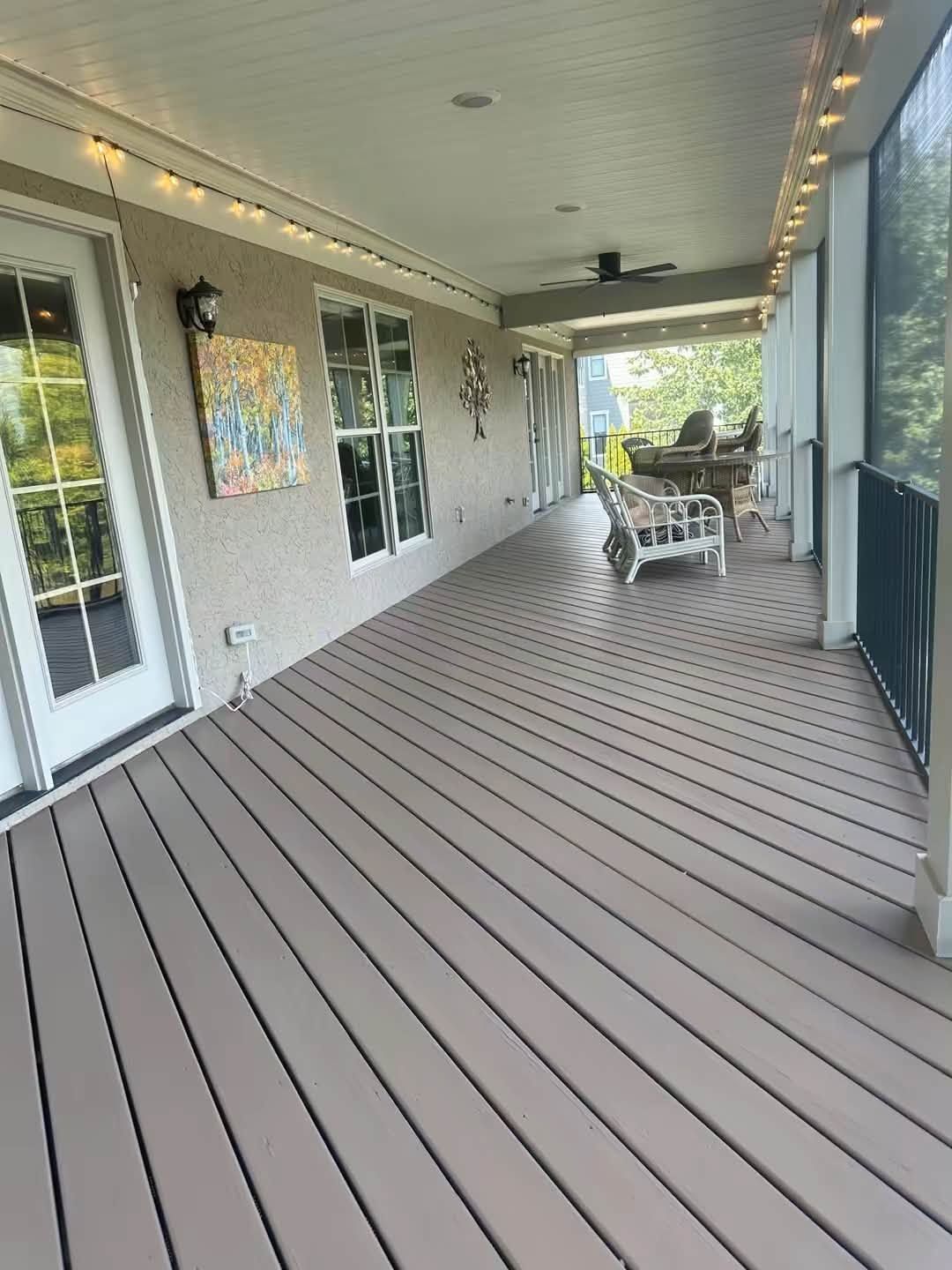
The deck surface turns gray and splintered, water soaks into the boards instead of beading on top, and the original stain has disappeared except in the shaded corners where it turned black. Many established homes in Mint Hill and Matthews carry decks built fifteen to twenty years ago when pressure-treated southern yellow pine was the standard lumber, and refinishing those platforms is one of the most common exterior repaints on older properties. The crew at Concepcion Barajas Painting Co. cleans, sands where needed, and stains with the product matched to the wood species and exposure, so the finish protects the boards rather than just covering them.
Boards are cleaned to remove dirt, mildew, and the loose gray fibers that form when unprotected wood weathers, then allowed to dry completely before any sanding or staining begins. Where the old finish has failed and peeled, the surface is sanded to bare wood so the new stain penetrates evenly without leaving dark patches where residue blocked absorption. Stain is applied by hand, brush, or sprayer depending on what the surface calls for, and stain choice and prep depth are discussed with the homeowner before the job starts so expectations and budget align.
Request a deck inspection to identify the current finish condition and prep requirements.
How Staining Addresses Weather Exposure
Stain penetrates the wood fibers and deposits pigment and resin below the surface, which blocks ultraviolet light and slows the breakdown of lignin that causes wood to turn gray and crack. Solid stains behave more like thin paint and sit on top of the grain, while semi-transparent stains soak in and let the wood texture show through, so the choice depends on whether you want to hide the aged appearance or preserve the grain pattern.
After staining, the deck surface sheds water instead of absorbing it, the boards stop splintering underfoot, and the color evens out across railings, treads, and posts. The finish darkens slightly as it cures, then stabilizes and holds that tone for several seasons before it begins to fade in the areas exposed to direct sun.
Staining protects the wood but does not repair structural damage, replace rotted boards, or tighten loose fasteners. Those repairs must be completed before staining begins, or the finish will trap moisture against compromised wood and accelerate decay underneath the coating.
Answers About How the Work Is Done
Deck owners ask about timing, prep work, and how long the stain will hold up under foot traffic and rain exposure.
What happens if the boards were never stained before?
Bare wood that has weathered gray must be cleaned and often sanded lightly to open the grain, because the surface fibers compress and harden with age, reducing stain absorption and leaving a blotchy appearance if applied without prep.
How is the stain applied to vertical railings and horizontal treads?
Railings are typically brushed to work stain into joints and turned balusters, while flat deck boards can be rolled or sprayed for speed, then back-brushed to even out the penetration and eliminate puddles that dry sticky.
Why does stain choice depend on the wood species?
Pressure-treated pine and cedar absorb stain at different rates, and hardwoods like ipe are too dense for most stains to penetrate, so the product must match the lumber or the finish will sit on top and peel within months.
What should be moved off the deck before work starts?
Furniture, grills, planters, and anything stored underneath the deck should be relocated so the crew can clean, sand, and stain all exposed surfaces without obstruction or overspray damage.
How long before the deck can handle rain after staining?
Most penetrating stains need 24 to 48 hours of dry weather to cure fully, so if rain is forecast within that window, the job is delayed or the stain may wash out of the wood before it sets.
Concepcion Barajas Painting Co. also stains decks in Matthews, Indian Trail, Charlotte, Huntersville and Cornelius. The family-run crew has painted since 2006 and operated the company since 2011, bringing over a decade of hands-on refinishing experience to each project.