
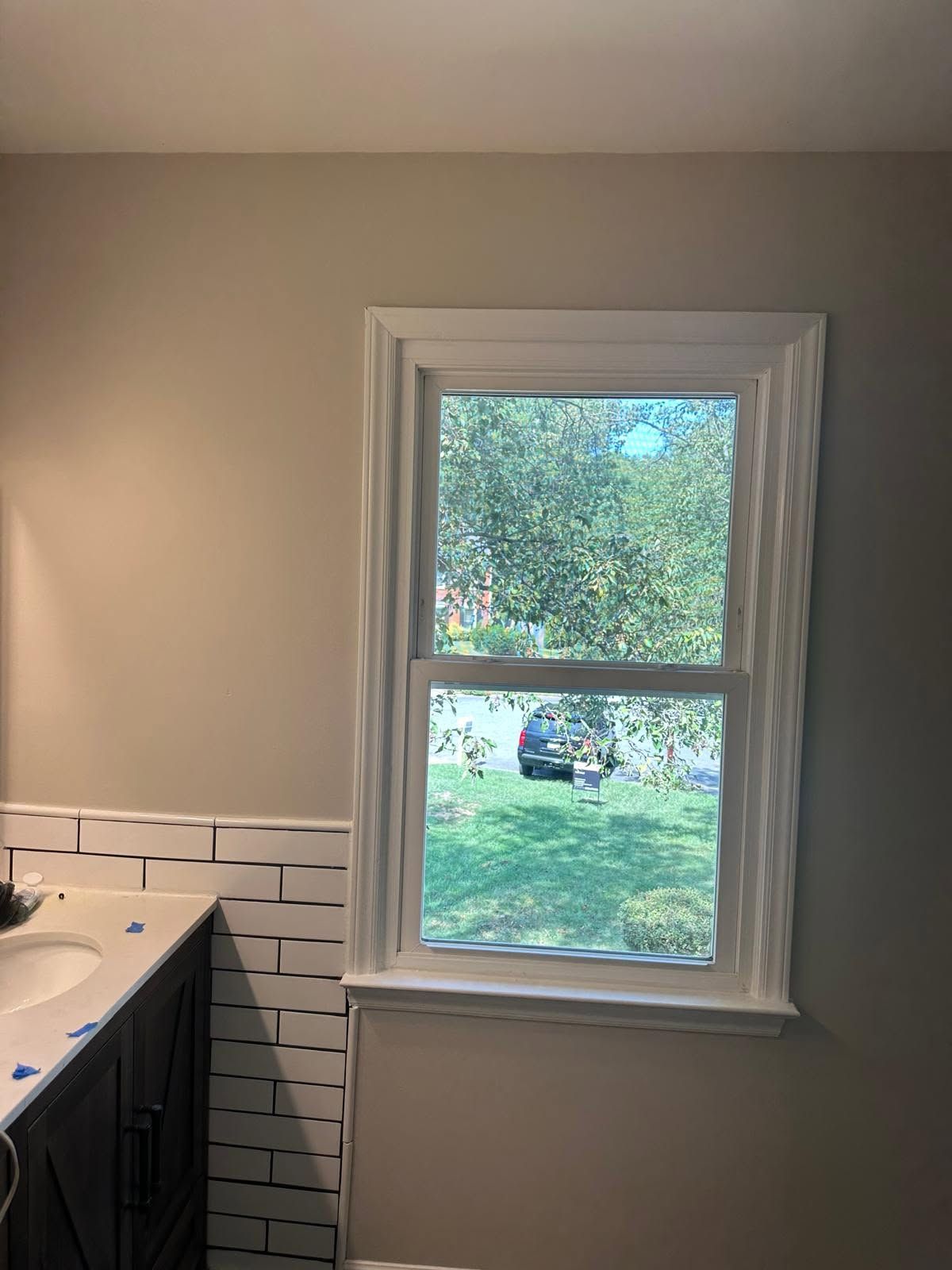
Lines That Stay Straight After the Tape Comes Off
Trim Painting in Mint Hill for baseboards, crown molding, and door casings that show wear, stains, or heavy buildup from earlier coats
Older homes in Matthews and Davidson were often built with stained or varnished trim that has yellowed and worn over decades, and painting over that finish without sanding and priming leaves a surface that chips easily and shows every brush mark once dry. Trim painting requires sanding to remove the old finish and create a profile for the new paint to bond, filling gaps and nail holes so the final coat reads as a continuous, smooth surface, and cutting clean lines where the trim meets the wall so the edge stays sharp without bleed or overlap. Concepcion Barajas Painting Co. handles interior and exterior trim, baseboards, crown molding and door casings across Mint Hill and surrounding areas, treating trim as precision work rather than a quick touch-up. The family-run crew has painted since 2006 and has operated the company since 2011, with detailed, careful work as the standard on every job.
Trim is sanded to remove the old finish and smooth the surface, then cleaned to remove dust. Nail holes, gaps between the trim and the wall, and cracks in the wood are filled with putty and sanded flush once dry. Bare wood is primed with a stain-blocking primer so tannins and previous finishes do not bleed through the topcoat, and walls are either masked carefully or cut in by hand so the paint line is straight and clean. Two finish coats are applied, with light sanding between coats to remove any dust or roughness.
Schedule a trim evaluation to assess the condition of your baseboards, casings and crown molding before repainting begins.
How Trim Preparation Affects the Final Line Quality
Trim painting begins with sanding the existing finish to remove gloss, yellowing and buildup, especially on stained or varnished wood that resists water-based paint without proper surface preparation. Gaps where the trim meets the wall are filled and sanded smooth, and nail holes are puttied so the surface reads as continuous rather than pocked or uneven. Primer is applied to bare wood and any areas where the old finish has been removed completely.
Once the work is finished, you notice that baseboards no longer show scuff marks, dents or discoloration, trim joints are tight and filled without visible gaps, and the painted edge where the trim meets the wall is straight and crisp without ragged overlap. Crown molding that was previously yellowed or stained now matches the color and sheen of the rest of the trim, and door casings look freshly installed rather than worn and layered with old paint.
Trim painting includes sanding, filling, priming and two finish coats, but does not include trim replacement, drywall repair, or patching damage to the wall surface itself, which are handled separately if found during prep.
Common Questions About This Service
Trim painting raises questions about preparation, material compatibility, and how the existing finish affects the process. The answers below address the service itself.
Why does stained trim need sanding before painting?
Stained or varnished trim has a glossy, sealed surface that water-based paint cannot bond to without mechanical abrasion, so sanding removes the finish and creates a profile that allows the primer to grip properly.
How are nail holes and gaps filled before painting?
Nail holes are filled with wood putty or spackling compound, allowed to dry, then sanded flush with the surface so the filled area disappears under the finish coat rather than remaining visible as a dimple or raised spot.
What keeps the paint line straight where trim meets the wall?
Walls are masked with painter's tape positioned precisely at the edge, or the trim is cut in carefully by hand with a small brush, so the paint stops cleanly at the boundary without bleeding onto the adjacent surface.
How does trim painting differ in older homes versus new construction around Mint Hill?
Older homes often have stained or heavily worn trim that requires sanding to remove the old finish and extensive filling to address gaps and damage, while new construction homes need only light sanding and priming before finish coats are applied.
What should you notice once trim painting is complete?
The trim should feel smooth without rough spots or drips, the color should be consistent without streaks or patches where previous finishes show through, and the edges where trim meets the wall should be straight and clean without ragged lines or tape residue.
Concepcion Barajas Painting Co. also paints trim in Matthews, Indian Trail, Charlotte, Huntersville and Cornelius. Call (704) 557-5072 to discuss your trim repainting project and schedule the work.