
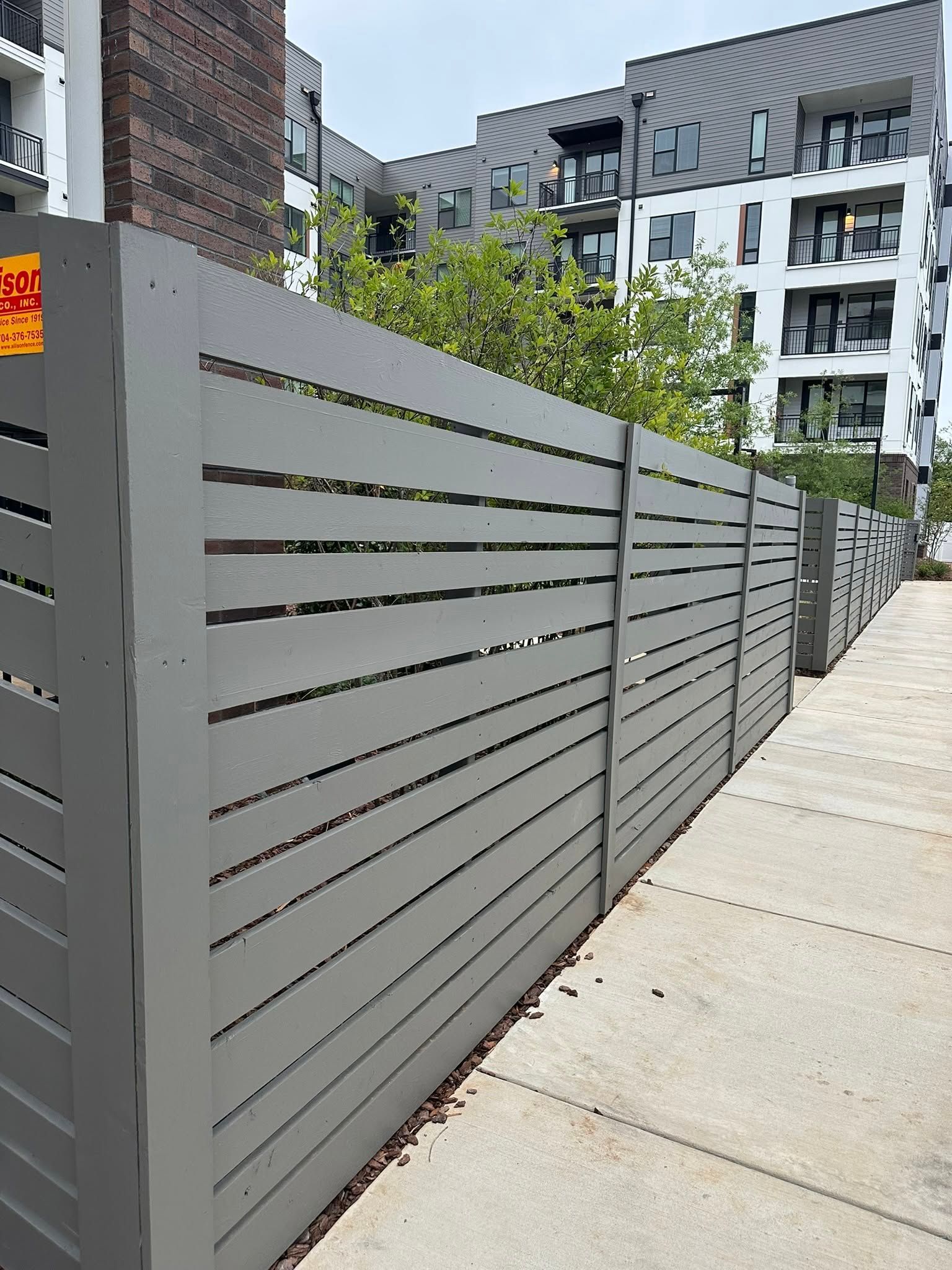
Restoring and Protecting Wood Fences
Fence Staining in Mint Hill for wood privacy and picket fences that have weathered or need fresh protection
Stain only bonds to a clean, dry surface, so the prep work determines how long the finish lasts and how evenly the color penetrates the wood. Concepcion Barajas Painting Co. stains wood privacy, picket, and backyard fences across Mint Hill, Matthews, Indian Trail, and the Lake Norman towns, working from fresh lumber or older fences that have gone grey and dry over the years. Many established homes in Mint Hill and Indian Trail have wood fences installed in the 1990s and early 2000s that were left unsealed or have lost their original finish to sun and moisture, so the repaint is often a restoration rather than a maintenance coat.
Fences are cleaned to bare wood before staining, with boards sanded where needed and cracked or loose pieces flagged for repair or replacement. The stain is applied in coats with trim and gates masked off, and the crew works by hand and by sprayer depending on the surface and the access. You see the wood grain become visible again and the boards take on an even, saturated color once the stain has been absorbed and the finish has cured.
Arrange a property visit to review fence condition and discuss stain type and color.
What Changes After the Fence Is Stained
Staining a wood fence restores the natural grain and seals the boards against moisture, UV damage, and insect activity. The surface changes from grey, dry, and splintered to smooth, saturated, and protected, and the color becomes uniform across all boards and rails. Concepcion Barajas Painting Co. is a family-run crew with over a decade of hands-on painting behind the owner, painting since 2006 and running the company since 2011, with a focus on detail and customer satisfaction, so each board is checked and finished properly rather than coated and left.
The work includes cleaning, sanding, stain application, and cleanup, but does not typically include fence repair, board replacement, or post leveling unless specifically agreed in the estimate. Confirm with the crew what is included in your quote so you know whether structural issues will be addressed before staining begins.
Stain penetrates the wood rather than sitting on top like paint, so the finish must be reapplied every two to four years depending on exposure, wood type, and the quality of the initial prep.
What Property Owners Ask About the Work
Homeowners with older wood fences often want to know whether the fence can be restored and what the staining process involves.
How are weathered fences prepared before staining?
Weathered fences are pressure-washed or scrubbed to remove dirt, mold, and loose wood fibers, then sanded where the surface is rough or splintered, so the stain absorbs evenly and the finish cures without streaking or pooling.
What is the difference between staining fresh wood and restoring an older fence?
Fresh wood absorbs stain quickly and evenly with minimal prep, while older fences in Mint Hill and Indian Trail that have gone grey or dry require more intensive cleaning, sanding, and sometimes repair before the stain can be applied properly.
Why is stain applied in coats rather than all at once?
Stain penetrates the wood in stages, so the first coat seals the surface and raises the grain, and the second coat saturates the wood and builds the color, ensuring even coverage and proper protection without over-saturation or runoff.
What should you notice once the fence is finished?
You should see a uniform color across all boards and rails without streaks, pooling, or light spots, and the wood should feel smooth and sealed rather than dry and splintered, with the grain visible through the stain.
How long does stain typically last on a wood fence?
When properly cleaned and applied, stain typically lasts two to four years on a privacy fence depending on sun exposure, moisture, and the type of stain used, with semi-transparent stains requiring more frequent reapplication than solid stains.
Concepcion Barajas Painting Co. also stains fences in Matthews, Indian Trail, Charlotte, Huntersville, and Cornelius. The crew treats each board with care, and the finished fence shows that attention when the color is even and the wood is protected.